
Learning
We have a wide variety of ways to learn about the story of Cromarty: explore our collection through the Museum of the Highlands and learn about the past with our curriculum-designed games and resources, hear the past through our interactive Fishertoun dictionary and hearing histories, and scroll through time with our interactive timeline.

Fishertoun Dictionary
Cromarty Timeline
Hearing Histories
Learning Resources
Museum of the Highlands
The Museum of the Highlands is an online museum featuring 15 museums from all over the north of Scotland. Use the interactive timeline to browse our collection, and explore learning resources for all ages and curricuum levels.
Fishertoun Dictionary
In the past, there would have been several distinct languages or dialects spoken within Cromarty. In 2007 a researcher from Am Baile, named Janine Donald, spent time with the last generation of fluent speakers of one of these, Fishertoun, in Cromarty and Resolis. We are grateful to the current team at Am Baile for allowing us to update and digitise their work.
Cromarty Fishertoun contains elements of a true language: words and phrases not found elsewhere, such as sallikataazar. There is also evidence of Highland fishing communities sharing vocabulary: there is Highland Scots, Scots Gaelic, Old Norse, and Doric influence here too. This was an oral rather than a written language and culture, so spellings vary.
You will discover here over 500 words and phrases which speak of a lost way of life, some of which are long overdue a revival: words for different kinds of wave, words for violence, words for food, for community and above all, for fishing.
Enjoy them, remember them – and use them.
Cromarty’s History Timeline
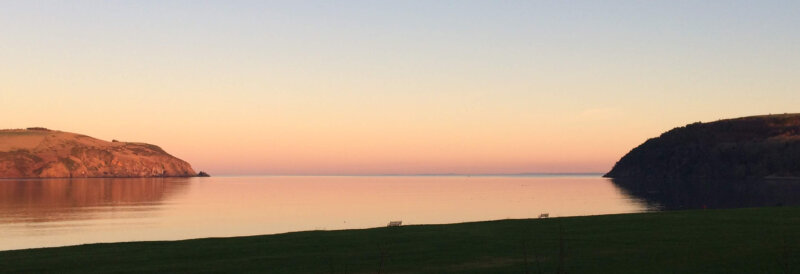
You might say that a key event in Cromarty’s early history was when glaciers travelling east broke through a rock barrier and created what we now call the Cromarty Firth, making its two distinctive headlands, the Sutors. The protection given by these headlands, along with fertile soils, abundant fish and a kind climate, made this an ideal site for human habitation. Legend has it that the Sutors were originally occupied by two giants, brothers, who were shoemakers. They shared their tools, tossing them from Sutor to Sutor which made rainbows joining the headlands. True or not, Sutor comes from the Scots word for a shoemaker or cobbler.
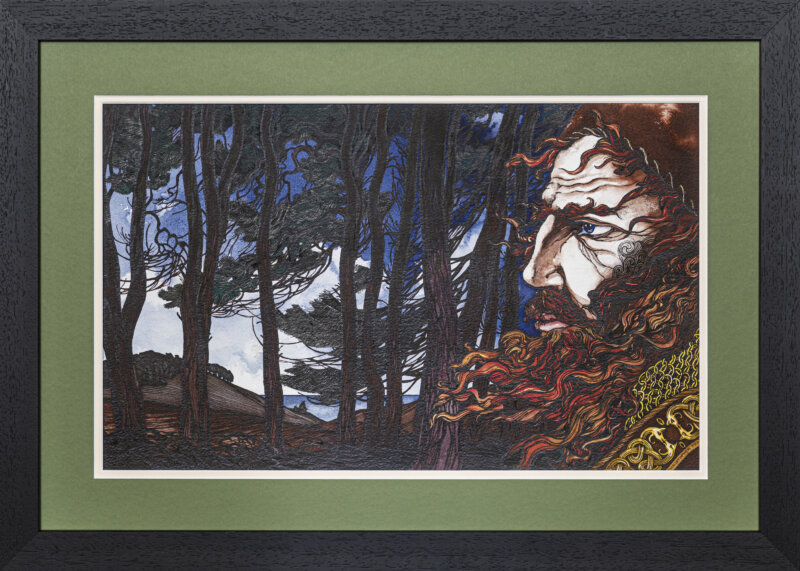
By the latter part of the First Millennium CE the Black Isle and Easter Ross were frontier lands in a struggle to control territory between the Norse, the Picts, the Scots/Gaels (and warring families within these groups). One warlord stands out – Macbeth. Did Shakespeare get it wrong and was Macbeth really Thane of Cromarty? Did one of the weird sisters actually say
“Lo, yondyr the thayne of Crwmbarthy”
If so, Cromarty’s contribution to the governorship of Scotland, it is claimed, was a king under whom the land did “prosper mightily” for the 17 years of his rule.
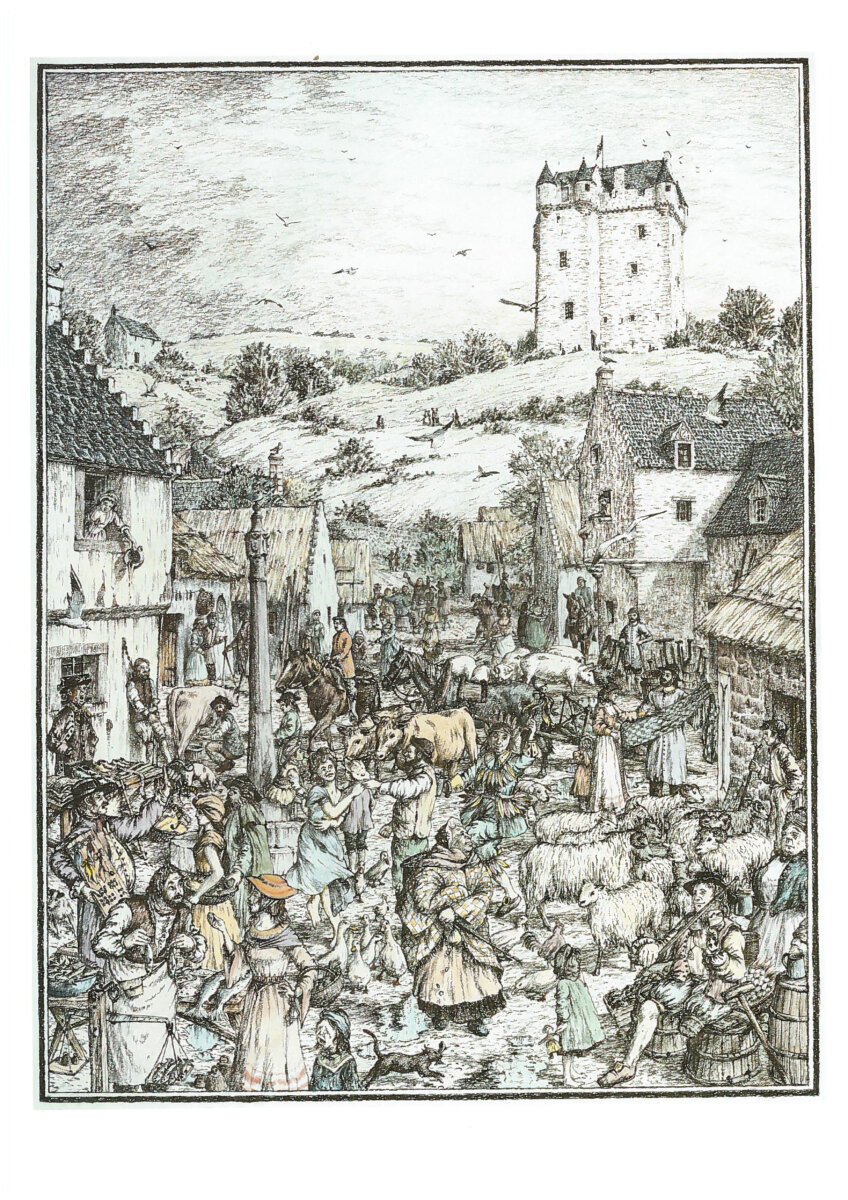
By the mid 1200s Cromarty and its hinterland were under the control of the Scottish Canmore kings and a part of feudal Scotland. Both the sheriffdom of Cromarty and Cromarty’s status as a royal burgh were established by the early 12th century. The status of a royal burgh gave the townspeople formal rights to trade and levy tolls from travellers and merchants, a portion of which were paid to the monarch. A wooden motte and bailey castle was built, reflecting the strategic importance of the burgh of Cromarty, controlling the entrance to the Cromarty Firth and the ferry crossing (to Nigg) on the coastal route north. A parish church was established and fishing, farming and trade all flourished. Finds of coins from the twelfth to fourteenth centuries suggest trade links not just within Scotland, but with England, Ireland and north west Europe. Some of this collection of coins, which have been described as ‘one of the most important in Scotland’, are on show in the museum.
A severe storm in December 2012 caused costal erosion which exposed significant medieval finds to the east of the current town. The subsequent three year community archeology investigation revealed that Cromarty appears to have been an important medieval town with substantial trade links in the 13th to 14th centuries with evidence of a significant fishing industry .
Cromarty, like the rest of the country, prospered during the Medieval Warm Period (which lasted to approx mid 14th century). But the advent of the Little Ice Age (which lasted to the early 18th century with occasional warmer decades) saw plague, famine and political instability in many parts of northern Europe, including Scotland. In these conditions Cromarty’s economy went into seesaw of decline and poverty / prosperity and wealth.
In 1470 William Urquhart, laird of Cromarty, was given permission to replace the wooden castle with a stone tower and from then on Cromarty castle became the holding of the Sherrifs of Cromarty and not the king; power was changing hands, from the monarch to local lairds. Just over a hundred years later Cromarty erected a new mercat cross, a sign that the economy was picking up. The town was granted a new charter (1593) which recognised it status as a royal burgh, confirmed the extent of its lands and protected its trading rights against competing towns. The charter recognised the importance of the harbour as ‘one of the best portes in this ysland’.
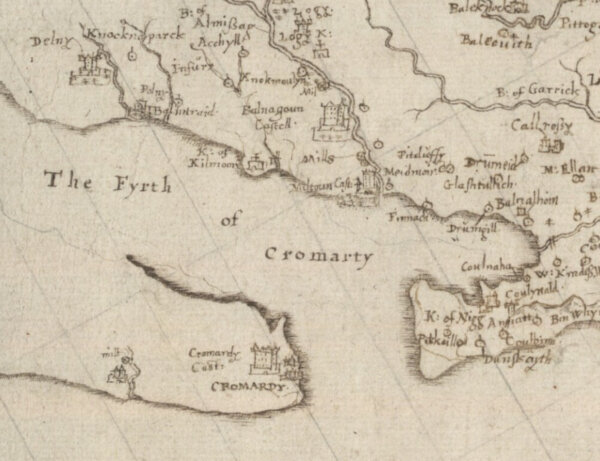
Timothy Pont’s map of Tarbert Ness (above, circa 1590) shows the burgh of Cromarty below the castle. The parish church became Presbyterian, a grammar school was established and the fishing industry expanded. The distinctive Fishertoun dialect (which retained some of the oldest forms of the Scots language) suggests that either the fisher folk had moved to Cromarty from elsewhere in Scotland or had kept alive some very old forms of Scots interwoven with words from Norse and Gaelic to create a unique dialect.
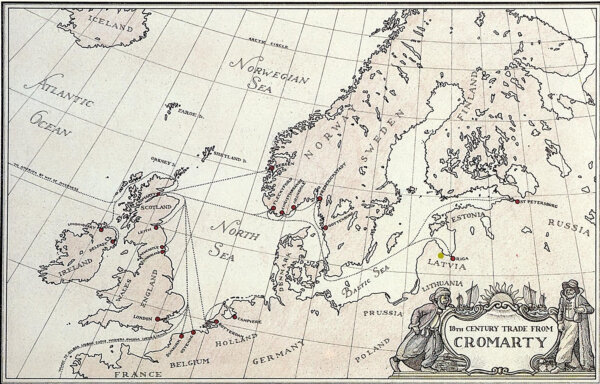
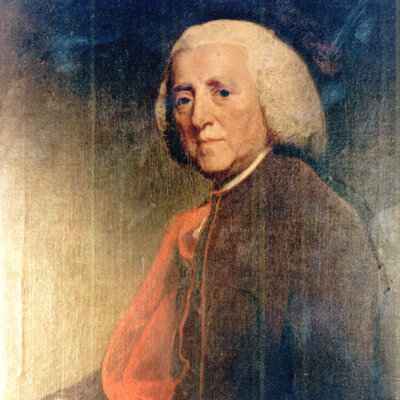
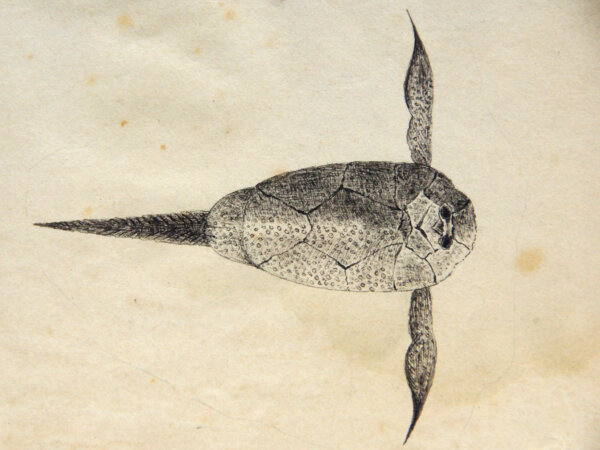
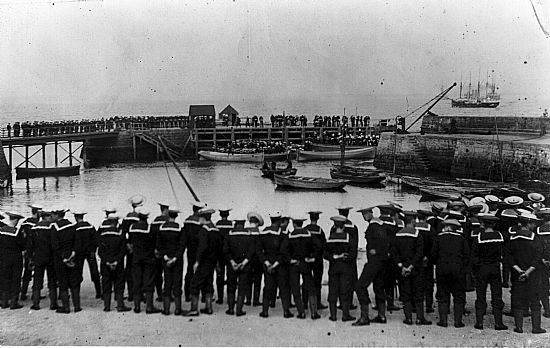
Wartime prosperity did not last and Cromarty sought new economic direction, this time from tourism, supplemented with regular visits from the Navy, but these were not sufficient to combat rising unemployment and depopulation. By the interwar period the fishing industry had collapsed, but there was some growth in service and professional jobs. Socially the town prospered, with an array of social, political, cultural and educational activities. Life in Cromarty in the 1930s has been beautifully captured by Eric Malcolm in his book The Cromarty we Knew.
In the run up to the Second World War the defences on the Sutors were again reinforced but the Home Fleet wasn’t based in the Cromarty Firth, although a Polish army unit (31st Silesian Regiment) was housed on the Links for a while. Post war the town’s decline continued, between 1921 and 1971 the population more than halved, to a low of approx 500. A turning point came with the opening of the HiFab construction yard at Nigg (with a regular Cromarty-Nigg ferry) and the creation of the Kessock Bridge, giving easy access to Inverness. Both contributed to widened job opportunities. New homes were created and old ones renovated. Repurposing Cromarty Courthouse as a museum provided a stimulus to tourism, and the town also became home to a wide range of artists and crafts people. As the 21st century progresses we are seeing a focus on sustainable economic activity creating job opportunities in communication technology, eco tourism and renewable energy.
Throughout its history the town has had a strong community spirit – evidenced recently in the work of the Cromarty Care Project during the 2020 Covid-19 lockdown, which was rewarded with a Queen’s Award for Voluntary Service in 2021.
As we look to the future, the museum is at an exciting point: read about our plans for future redevelopment here.
Hearing Histories
In the museum you can hear four different stories from the Courthouse’s past; ‘soundscapes’ we call them. Three tell a different tales on a journey through Highland justice, as experienced in the parishes of Cromarty and Resolis. One gives the reflections of a Cromarty man Imprisoned in England. The stories are all spoken by local people and told in Cromarty’s unique dialect.
You will meet Sir Thomas Urquhart, Laird of Cromarty in the early 17th century. Imprisoned in England after the Battle of Worcester, where he had fought for the Royalists against Cromwell’s army, he longs to return to Cromarty. Our ten short scripts will tell you much more about him. Genius? Eccentric? Madman? That is for you to decide. Sir Thomas sits and dreams of home not far from the entrance to the Courthouse downstairs.
Along in the cells you will find The Smiddy Prisoner, a miserable early Victorian Resolis blacksmith (occupying a cell on a charge of theft). He’s in conversation with his jailer and we learn about the events which brought him to jail. Was it really a crime to be poor?
Upstairs In the courtroom two trials are underway. The Mercat Cross trial, a sorry tale of vandalism and mean-spiritedness, dates from 1772 when Cromarty Courthouse was brand new and not yet fully fitted out. The Broken Fiddle trial, set in 1776, begins with a violent alehouse brawl (the gardeners versus the weavers) but all is not as simple as it seems. Do the punishments fit the crime?
An English language summary of each story is available, and the audio can be listened to via a subtitled video.
Sir Thomas Urquhart
Summaries
Track 1: On Inverness Magistrates
Aim: to communicate Sir Thomas’ ambition for Cromarty and how it was thwarted by the magistrates of Inverness
Sir Thomas Urquhart has issues with many authority-figures other than himself. Magistrates are no exception and Inverness magistrates are particularly despised. In the 21st century the City of Inverness may be the Capital of the Highlands but in his captivity over four centuries earlier Sir Thomas imagines his own beloved little town of Cromarty thriving in its stead. In spite of Cromarty’s location on the magnificent deep-water haven of the Cromarty Firth, the canny burgesses of Inverness have the ear of the King, which makes all the difference. When Sir Thomas dreams, it is always hard to tell whether his imaginings could really have come true or not.
Track 2: On Idling and Industry
Aim: to set out how Sir Thomas hoped to see the townsfolk of Cromarty occupy their time
Sir Thomas clearly cannot abide an idle pair of hands. Here he thinks back to ‘his’ people in the town of Cromarty and all the beneficial activities in which he would have encouraged them to participate: improving farmland, quarrying stone, even prospecting for precious metals. Whether the benefits of such employment would have been greater for Sir Thomas or for the townsfolk is, of course, a matter for discussion…
Track 3: On Learning and Accomplishment
Aim: to communicate Sir Thomas’ appreciation for learning
Sir Thomas is a great believer in occupying people’s time beneficially and imagines himself encouraging his townsfolk to excel both physically and mentally. Given George Ross’s difficult experiences as an improving laird only a century later, it is hard to see the good folk of Cromarty wholeheartedly embracing this fantasy. The fact that many of these activities would have provided Cromarty – and Sir Thomas – with a well-trained body of fighting men cannot be coincidental. Altruism or self-interest?
Track 4: On London Bankers
Aim: to demonstrate Sir Thomas’ loathing of Scots bankers in London
Imagine the difficulty. Sir Thomas cannot ever seriously have imagined that the Royalists would lose the Battle of Worcester, but they did. He is imprisoned by Oliver Cromwell, first in the Tower of London, then in Windsor Castle. His lands, his tenants, his castle, are in the far north of Scotland. He needs money to pay for food, for clothing, for wine, for bribes. No cashpoints then. Instead he must rely on the good offices of Scots bankers who have settled in London, rich men who (as Sir Thomas must see it) have ‘sold out’ to the enemy who holds him captive. Sir Thomas uses some choice vocabulary to describe their reluctance to advance him any money, but can you honestly blame the bankers?
Collybist is from the Greek for money-changer
Cunquising (-qui-rhymes with why, pronounced coo-nk-why-zing) is all-conquering
Clusterfists means a niggard or a close-fisted person
Joltheid is a thick-head, a word long overdue for a comeback…
Track 5: On Master Gilbert Anderson, Minister of Religion
Aim: to communicate Sir Thomas ongoing feud with a local minister
Meet another authority-figure with whom Sir Thomas has crossed swords: Master Gilbert Anderson, the local minister in Cromarty. We need to remember that in 1560 the ‘old’ Roman Catholic religion was kicked out in favour of a new Protestant faith: the Scottish Reformation. Sir Thomas still behaves as though he can control the actions of Cromarty’s minister, but this is no longer the case. The pair have an almighty falling-out over the installation of a new pew in what we now call the East Church (which you can visit at the south-eastern end of Church Street) and from that point onwards Master Anderson denounces Sir Thomas from the pulpit at every opportunity.
Track 6: On the Joys of Science and Mathematics
Aim: to communicate Sir Thomas’ love of mathematics and learning
This story illustrates the obsessive quality to Sir Thomas’ quest for knowledge. He tells the tale of a visitor who goes off in search of a day’s shooting and comes back laden with wildfowl and how other guests rib him about not going along too. Something about his response is deeply moving and perhaps suggests a man with an autistic streak. Sir Thomas does not appear to understand that he is being gently teased and cannot see anything at all unreasonable in leaving a guest to go and hunt for duck on his own. Sir Thomas is a polymath: he loves physical science and his many detailed and complex mathematical theories (which once baffled all who tried to fathom them) have been reassessed positively by more recent mathematicians.
Track 7: On His Universal Language
Aim: to demonstrate Sir Thomas’ ability with languages
Sir Thomas sees many of the world’s problems as stemming from the lack of a universal language – and so he invents one and calls it his Jewel. The Jewel is a complicated language and has ‘eleven genders, seven moods, ten cases (besides the nominative) and twelve parts of speech.’ He loves ornamenting his language, both written and spoken, with different oratorical and literary flourishes. This sometimes makes him rather difficult to understand. Epiphonimas is an exclamation which summarises what has just been said [Ehp-uh-foe-knee-mas]
Track 8: On his Love for Rabelais and Humour
Aim: to illustrate Sir Thomas’ passion for wit and for Rabelais.
As well as excelling at mathematics and inventing a universal language, Sir Thomas fell under the spell of the French author Rabelais and embarked on a translation of his great work Gargantua, which sends up society and those who over-indulge in food and drink in highly entertaining and vulgar ways. While not a literal translation, Sir Thomas’ rendering of Gargantua is still praised for communicating the spirit of the original better than any other. Here is one short introductory section about how humour can lift the spirits:
‘Good friends, my readers, who peruse this book,
Be not offended, whilst on it you look:
Denude yourselves of all depraved affection,
For it contains no badness nor infection:
Tis true that it brings forth to you no birth
Of any value; but in point of mirth;
Thinking therefore how sorrow might your mind
Consume; I could no apter subject find;
One inch of joy surmounts of grief a span;
Because to laugh is proper to the man.’
Track 9: On Genealogy and Heraldry
Aim: to enthuse visitors for Sir T’s own love of genealogy and heraldry and to use and explain one of his long Greek names for his work
Many people today use websites such as Ancestry.com to search for their ancestors. This was fashionable too in Sir Thomas’ day and he, naturally, goes further back than anyone else, tracing his lineage to Adam, Eve and therefore by extension to God. He calls this family tree his Pantochronocanon and has it with him at the moment of his capture by the Government soldiers after the Battle of Worcester. Horror of horrors, his captors rip his beloved Pantochronocanon into pieces and use it to light their pipes. Pantochronocanon is pronounced Pantokronokanon – short o not long oh.
Track 10: On the Hunting of Witches
Aim: to communicate Sir Thomas’ enlightened and modern views on witchcraft
The Black Isle was a place where grim accusations of witchcraft resulted in condemnation to death in appalling ways, such as burning alive in a barrel of tar (a woman was burned as late as 1727 a little to the north of here). The Sheriffs of Cromarty held the hereditary right to pursue witches and here a young Sir Thomas acting for his father has two people brought before him who confess that they have been ‘consorting with demons’. Sir Thomas, freshly returned from travels on the Continent with a broadened mind, deals with the tricky situation in a very modern way. He puts the pair up in the castle overnight and uses clever psychology and a tempting trick to reveal that the consorting with demons to which they have confessed is the result of fevered and frustrated imaginations. Sir Thomas not only spares them a horrible fate by his sensitive handling of their case but finds them each a spouse from within his own household. The witch finder must have been livid, and doubtless the outcome made Sir Thomas enemies in the church: it is likely however that Sir Thomas Urquhart would simply not have noticed this – or would not have cared if he did.
The Prisoner
Summary
A summary of the Smiddy Prisoner soundscape story in English:
This Courthouse soundscape takes us forward in time, from the late 18th century trial in the courtroom upstairs to the early Victorian era. In this period both debt and eviction are a grim fact of life for many tenant farmers – and one particularly unfortunate blacksmith and his family. There is no poorhouse to help them out either, for Chanonry Poorhouse will only open in 1859.
Both Hugh Sinclair (the prisoner awaiting trial) and George Ross (the jailer in 1841 – not the same George Ross as upstairs) are real people.
Sinclair is sitting in the cell. Ross is embodied by the visitor standing in the doorway or the corridor – you will only hear his voice.
These two men clearly know each other already, which is highly likely. Ross is not unsympathetic but has a job to do. Sinclair is in utter despair and close to starvation. His wife Cursty has also been arrested.
The scene opens with a key turning in a lock and a door creaking open, the prisoner coughing and scraping at a metal bowl. George Ross offers him more brose (a kind of thin porridge) and notes how hungry he is. Sinclair tells him that the food mostly goes to his children – he has seven of them, and Cursty is expecting another. It was common for those working in farming circles at the time to have large families – grow-your-own farm labour – but this had to be balanced by an ability to feed them.
Sinclair blames his situation on his landlord, the laird Major Gun Munro of Newhall House (about six miles to the west of Cromarty). Ross points out that there are far worse landlords than Gun Munro, and that Sinclair and his wife have made their situation worse by fighting back. It becomes clear that their possessions have all been sold off in a public sale, including the tatties (potatoes) with which the couple planned to feed their children, and even the tools which were once those of Sinclair’s blacksmith grandfather. Sinclair stole those tools back again, possibly when drunk. On hearing the news of his arrest, his firebrand wife Cursty went and attacked the bailiff’s men afterwards in a local alehouse.
George Ross suggests that Sinclair might fare better abroad – many families are leaving the Highlands for a new life in Canada, America or Australia at this time – but Sinclair bitterly asks him where the money is going to come from for the fare.
No, at best poor homeless Hugh Sinclair can hope for a compassionate sentence of a short imprisonment – for neither he nor Cursty can pay a fine – followed by another job as a blacksmith.
When last heard of, Sinclair is in fact working for another blacksmith near Culloden.
This soundscape story is based on research work by Dr James Mackay of the Kirkmichael Trust. For similar stories see www.kirkmichael.info.
The Mercat Cross
Summary
A summary of the Mercat Cross story in English:
The late 18th century covered a period known as the Scottish Enlightenment. In response to the horrors and division of the Jacobite rebellion just a few decades earlier, wealthy landowners such as George Ross (the senior Justice) tried to bring peace, justice and improvement to their estates. Ross is a wealthy lawyer who has made his fortune in London prior to buying the run-down Cromarty Estate as a retirement project. He is flanked by William Forsyth, a successful and well-travelled Cromarty merchant and Hugh Rose, another wealthy local landowner.
It is George Ross who has funded the construction of this new Courthouse and it is still being fitted out internally. Before this, trials were heard in a local alehouse.
This trial seems, at first, simple enough. Cromarty man Jamesie (or James or Jamie) Banks has been caught after breaking the mercat cross – once the symbol of the burgh’s right to trade.
Simple vandalism, then – but is vandalism ever truly simple?
The only witness to the crime is a local widow, whom we have named Widow, or Mistress, Hogg.
It becomes clear that the other townsfolk have been most unwilling to talk about why Banks may have broken the cross or give any idea of who else may have been involved. They have closed ranks. In spite of all his good works in the town, George Ross is still seen as an incomer and outsider. How depressing that must have been. His new courthouse barely complete, its interior still being fitted out, and now the mercat cross he has so carefully transported to the front of the building has been smashed.
He knows who did it. What George Ross really wants to know now is why.
The townsfolk are shocked to learn that his surprise witness, Widow Hogg, has accepted his generous bribe to confess what she saw – or heard rather – on the night the cross was broken. Thanks to her testimony she will be provided with money and a comfortable home for life. She heard laughter, she says, at first taking the voices to be those of people who had attended a lavish party George Ross had held to celebrate the completion of the Courthouse works that night. Later, however, listening from the chilly attic she occupies above the rooms of Banks and his wife, Mistress Hogg hears Banks return late and fall in the washing tub. There is an argument and Banks tells his wife to hold her tongue, if she doesn’t want to see him hanged for what he has done.
Once questioned, Jamesie Banks himself blames everything on excessive drinking and a defective memory – and who can blame him, for someone has been hurling rocks against the bars of his cell in an effort to intimidate him into silence. He changes his tune as soon as he hears that William Elder’s man (whom we have called Alexander Hossack) managed to give chase and capture the culprit, a local thug named Robbie Williamson. The spectators approve.
Banks then explains that he and several unnamed others involved disliked George Ross’s attempts to improve Cromarty on ‘moral’ grounds, including his placing of Buckinghamshire farmers to instruct them in ploughing and their wives who he hopes will teach local women to make lace. They even disapproved of the introduction of pigs as meat.
Ross had paraded the old cross through the town to relocate it, giving Banks and his cronies an excuse to destroy it on religious grounds, he claims, as a pre-Reformation idol. So there even appears to be religious disapproval underlying of some of George Ross’ well-intentioned actions – or is there?
The Justices now press Banks for the names of the other men involved. Banks honourably and obstinately refuses to give way. William Forsyth suggests a clever way out and so Banks agrees, with considerable relief, not to perjure himself by naming his former friends, but instead to name their roles. Ross finds out that he was betrayed and ridiculed by those he had placed in positions of confidence: the managers of his brewery, his hempworks and even the nailworks where Jamesie works. Jamesie confesses that their motivation was in fact in the main disgruntlement at not being allowed to come to the grand party up at the big house.
The Justices decide that there is little point in pursuing the three guilty managers since they will be long gone, and having assaulted a Sheriff’s Officer a grim future awaits Robbie Williamson: but what are they to do with Jamesie Banks? He did after all, eventually, tell the truth. George Ross is clever enough to know that any serious punishment of Banks will undermine his fragile popularity in the town: instead he fines him and in a stroke of genius orders him to mend the mercat cross in the sight of all. Jamesie’s mends can still be seen holding the cross together today.
At the end of the story the Seers remind us that instead of Kirk Session or Court records, we have the remarkable pen of scientist and man of letters Hugh Miller to thank for this fabulously detailed account of the mercat cross incident. He describes the story’s origins in his Scenes and Legends of the Northern Highlands, packed with detail of life in Cromarty, Resolis and this part of the Highlands.
Miller [1802 – 1856] was born in the thatched cottage just two doors along from Cromarty Courthouse. The Hugh Miller Birthplace Cottage and Museum is in the care of the National Trust for Scotland and well worth a visit.
The Broken Fiddle
Summary
A summary of the Broken Fiddle story in English:
The late 18th century covered a period known as the Scottish Enlightenment. In response to the horrors and division of the Jacobite rebellion just a few decades earlier, wealthy landowners such as George Ross (the senior Justice) tried to bring peace, justice and improvement to their estates. Ross is a wealthy lawyer who has made his fortune in London prior to buying the run-down Cromarty Estate as a retirement project. He is flanked by William Forsyth, a successful and well-travelled Cromarty merchant and Hugh Rose, another wealthy local landowner.
It is George Ross who has funded the new Courthouse. Before this, trials were heard in a local alehouse.
A group of young gardeners and a group of weavers – rival local gangs – have had a drunken punch-up in an alehouse and William Naughty, one of the weavers, has been seriously injured. The group of the lads responsible for the riot would have been tried en masse, but to make the scene easier to follow we have chosen to make Cuthbert MacKenzie, one of the gardeners, the sole defendant.
The witnesses to the crime are two alehouse keepers: William Elder, who doubles as the jailer, and Jannet Ross (no relation to George Ross). Two alehouse keepers in the same town are likely to have been rivals, so in this telling of the tale there is no love lost between them.
Jannet gives a vivid account of the weavers sitting in her downstairs room and the gardeners starting to dance to the tune of Cuthbert’s fiddle in the room above. The thump of their feet shakes dirt from the floorboards into the weavers’ bowl of punch below and the weavers, already drunk, retaliate by singing a rude song back at the gardeners. Soon they are knocking seven bells out of each other. Jannet panics and sends for William Elder as the Sheriff’s man. By the time he gets there, they are sprawled about the highway outside the alehouse.
George Ross warns Jannet to keep a better ordered alehouse or face charges herself.
Cuthbert MacKenzie has come into Cromarty from neighbouring Resolis in search of work and George Ross himself has taken him on as a gardener. He is one of an increasing number of Gaelic-speaking people in the locality, but Cromarty in this period does not consider itself a Gaelic-speaking town. Gaelic speakers were often looked down on by non-Gaelic areas in the decades following the Battle of Culloden.
It is a simple case of ‘them and us’.
Cuthbert tries to explain that his precious fiddle got broken in the riot and that he had only fought at all because the Cromarty weavers were taunting him for being a Gaelic speaker. This excuse fails to impress the Justices: keeping order between all the different factions in the town is George Ross’s hardest task as Laird.
Ross finds out that MacKenzie has agreed to join the army and although he initially presses for a fine too, he then relents.
The ‘Seers’ at the end foretell MacKenzie’s army career: initially he is stationed at Fort George and does well, rising to the rank of pay sergeant. The regiment is then ordered to America and marched south. MacKenzie deserts at Stirling. The only place he has any family or friends is Cromarty but William Elder arrests him on his return. MacKenzie is soon handed over to the Army who will have made an example of him and had him flogged. This was a grim fate not all survived.
This trial is based on original trial records, Kirk Session documents and Army records.
Learning Resources: Crumbs of Justice
We call these activities Crumbs of Justice because, right at the start, we wanted to explore one crime through time, and thought the crime might be the theft of a loaf of bread. Instead, we realised that poaching was a more frequent offence here and so created Activity 1.
Based on fact but using fiction and role-play to bring the stories to life, all these activities explore concepts of fairness and justice through time in this particular part of the Highlands. They are generally aimed at use with classes ranging from P4 to S3 unless specified. They do not require a visit to the Courthouse, although a visit will of course complement any of them. Most use additional materials available within the Courthouse Learning Zone Loan Kit so please book this early if you would like to use it.

The Poachers
1360 – 2019
This justice game activity explores one crime – poaching – from the late mediaeval period right through to the present day. Pupils are invited to match punishment and crime from different periods of history, providing an insight into how punishment has evolved through time.

Witchcraft
c.1620
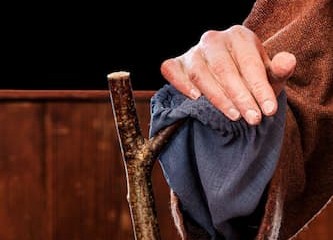
In 1620 Sir Thomas Urquhart used some surprisingly modern psychology to save the lives of two self-confessed ‘witches’. A useful activity for any pupils studying Arthur Miller’s ‘The Crucible’ in English, witchcraft in history, or mass hysteria in psychology. The Sheriffs of Cromarty had the power to seek out witches, but some did so more assiduously than others.
Seizures of a Ship
1672
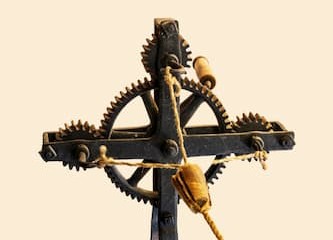
This activity reveals that the Sheriffs of Cromarty sometimes seized ships as ‘prizes’. This mostly took place in the sixteenth century but Sir John Urquhart, nephew of Sir Thomas, revived the tradition in the late seventeenth century. This activity shows what it must have been like for the skipper and crew of the vessel Patience.
The Riots
1732, 1741, 1843
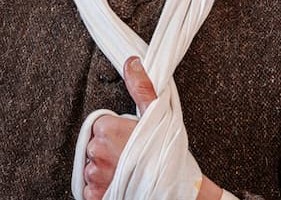
This discussion activity focuses on three local riots one over the enclosure of a peat moss at Blackstand in 1732, the second over profiteering from grain during a time of shortage of food in 1741 and finally (and famously) over the Great Disruption in the Church of Scotland in 1843, which led to the formation of the Free Church of Scotland.
The Thieves
1779
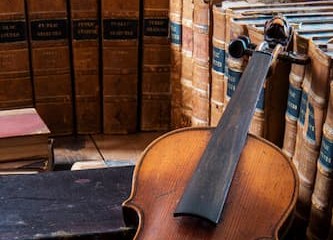
This activity will introduce pupils to the generous Cromarty landowner George Ross, who is faced with a nasty case of theft from his own ropeworks. This activity is written to encourage debate about the relative guilt and fates of the people involved, looking at the differences in punishment between men and women and the impact of banishment.
Eviction & Bankruptcy
1841
This activity takes us to the period of the Highland Clearances, allowing pupils to view well-documented events through the eyes of a woman, Cursty. The tale of her husband, Hugh Sinclair, is told in Cell B. It is designed to encourage pupils to reflect on who it is who has written history. Women’s stories are seldom told, and poor women’s stories, almost never.